PONDERIZE PLAN B
Updated: Nov 19, 2020
A MESSAGE FROM OUR EMERGENCY PREPAREDNESS COORDINATOR
I'm Paul Brown, President Kathryn Brown's sidekick and the Ward Emergency
Preparedness Coordinator. I miss seeing all of you at our weekly meetings during
the pandemic.
So, let's think about emergency preparedness. Before your eyes glaze over,
you're already thinking about it. Daily. When you fasten your seat belt, you're
taking an action to mitigate something that you don't want to happen. Do you
have a flashlight in your house? You're realizing that the electricity won't always
be available. Or a first aid kit? You're not planning on hurting yourself, but
realizing that - well - things happen.
I've had to throw out tons of stored wheat from my parents' basement. They were
told that one can live on stored wheat, powdered milk, and salt. I've not heard
about storing 2 years worth of food for a long time. (And it’s not just about wheat:
eating only whole wheat bread would get wearying very quickly. If you're going to
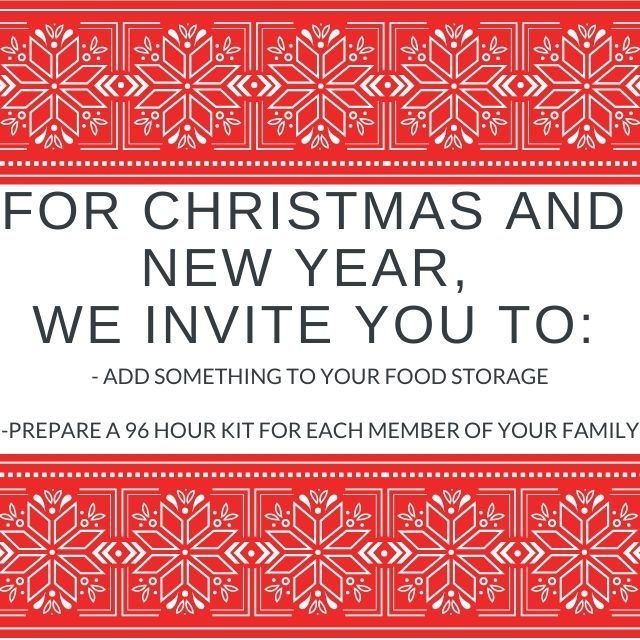
store food, store what you'll want to eat.) Rather, we're asked to put together a kit
that contains things we'll want for a 72- or 96-hour period.
To my thinking, both the stored food and the 72-hour kits have their place: the
stored food is preparation for an interruption in our food supply chain (and
assumes you can remain in your house to grind the wheat into flour and bake
your bread). The 72-hour kit is something you take with you if you can't remain in
your housing - like after an earthquake or in advance of a wildfire.
We make plans all of the time. Things we want to happen are our Plan A.
Thinking about emergency preparedness is a start on Plan B: what we will do if
Plan A doesn't work out.
Ponderize Plan B a little this week.



I liked how the post encourages thinking ahead with a Plan B and staying calm when things change. During an especially busy semester, focusing on how to complete my associate level course felt like my own backup plan. That experience showed me how simple preparation can make overwhelming weeks easier to handle.
I liked how this post talked about slowing down and choosing small, thoughtful steps instead of stressing over a perfect plan. That idea felt real to me during a busy week at school when I was trying to Finish my online calculas class and had to break everything into smaller goals. Taking it one piece at a time helped me stay calm and focused. It reminded me that progress still counts, even when it feels slow.
The post talks about thinking ahead with a Plan B and how being ready for emergencies can help you stay calm when things go wrong. I remembered a time last semester when I was so busy I had to pay someone to do my online class just to catch up, and it felt like my own backup plan so I could stay on track. It made me think that having a simple backup plan in life can make hard weeks feel easier.